


NPFMC Announcements | 2025 Observer Program Annual Report | BSAI Crab Harvest Specifications | Scallop Harvest Specifications | Cost Recovery Report and Program Improvements | GOA Tanner Crab Protection Measures | Pelagic Trawl Gear Research Updates | Groundfish FMP Objectives Triennial Report | Climate Workplan and Alternative Harvest Control Rules | B Reports | Reports from Cooperatives, IPAs, and SeaShare | Salmon Genetics Reports | U.S. Coast Guard Announcement | Staff Tasking | SSC-only Agenda Items | Economic and Community Indicator Reports | Gulf of Alaska (GOA) 2025 Survey |Upcoming Meetings
New and departing Council members

The Council recognized several changes in its membership, welcoming new members and acknowledging the service of departing members.
This was Mr. Rudy Tsukada’s last Council meeting as a sitting member. Rudy was appointed to the Council in August 2023 and recently retired as the Chief Operating Officer of Coastal Villages Region Fund (CVRF), one of the six CDQ groups. During his Council tenure, Rudy provided valuable insight and perspective that helped inform fisheries management decisions across the North Pacific region. The Council expressed their appreciation for his service and contributions to the Council process, and wished him all the best in the future.
At this meeting, the Council welcomed Mr. Bruce McIntosh, who has been appointed as the primary designee for Dr. Debbie Colbert, Director of the Oregon Department of Fish and Wildlife. Bruce served with ODFW for many years in a variety of roles, leading programs, developing policy, and managing ESA-listed salmon and steelhead. At the June meeting, Mr. John Seabourne, Dr. Colbert’s secondary designee since October 2022, also represented Oregon during some agenda items.
The Council also welcomed Mr. Barry Thom, Executive Director of the Pacific States Marine Fisheries Commission (PSMFC), who attended the June meeting. In recent years, Chris Oliver has served on the Council as Mr. Thom’s designee, but he is now stepping down. Mr. Thom has served as Executive Director since 2022 and previously spent many years with NOAA Fisheries’ West Coast Regional Office, including five years as Regional Administrator. He has identified two alternate designees, Dr. Scott Rumsey and Dr. Caren Braby, who may represent PSMFC at future Council meetings.
Thank You to Vancouver
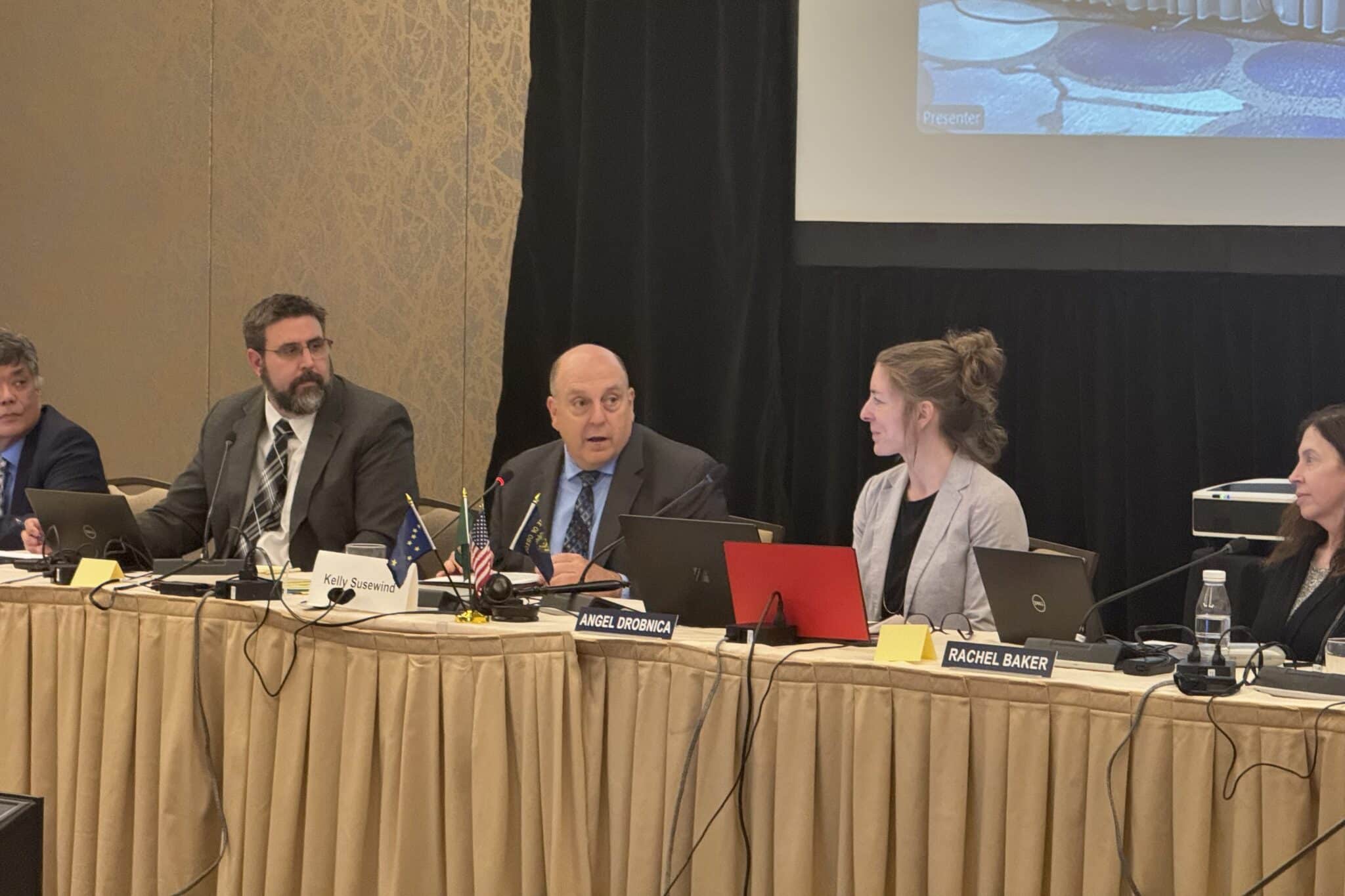
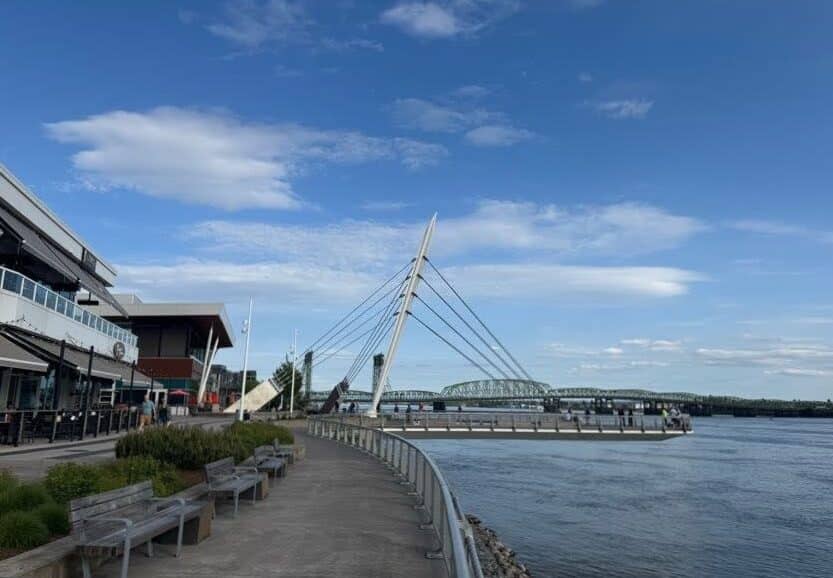
The June 2026 meeting marked the first time the North Pacific Fishery Management Council convened in Vancouver, Washington. Mr. Kelly Susewind, the Director of the Washington Department of Fish and Wildlife, welcomed the Council to Washington and spoke about the importance of continued collaboration among fisheries managers, stakeholders, and coastal communities throughout the Pacific Northwest and Alaska. Mr. Susewind is represented on the Council by Mr. Nate Pamplin.
During the meeting, Council members, advisory body members, staff, agency partners, industry representatives, and members of the public gathered for a reception. The Council extends its sincere appreciation to Pacific Seafood and other sponsors whose generosity helped make the event possible, including the Pacific Seafood Processors Association, Midwater Trawlers Cooperative, Groundfish Forum, Freezer Longline Coalition, and At-Sea Processors Association. Their support provided an opportunity for attendees to connect in an informal setting and continue conversations outside the meeting room, helping strengthen the relationships and collaboration that support effective fisheries management.
Call for Nominations
The Council is accepting nominations for its Scientific and Statistical Committee (SSC) and Advisory Panel (AP) for 2027. Nominations, letters of interest, and a resume should be submitted via a nomination portal that will be accessible through the Council’s eAgenda homepage in the next few weeks. Materials will be accepted through October 31, 2026 at 5 pm Alaska time. Please note that all submissions will be viewable on the webpage.
The SSC members serve one-year terms and may be reappointed with no term limits. The Council is interested in appointing up to two additional members to the SSC. Following the recommendation of the SSC, the Council is prioritizing nominations with expertise in stock assessment, statistical design and modern statistical modeling methods. The Council will also consider nominations from expert social scientists with a background in anthropology, sociology, human geography, or a related field, or an expert with experience in climate, ecosystem and integrated thinking.
A description of AP membership criteria and duties is included in the AP Handbook. Members can be appointed for a 1, 2, or 3-year term by the Council, and can serve a maximum of nine consecutive years. The eAgenda nomination portal will be updated to provide a list of AP members whose term is expiring at the end of this calendar year. The Council is interested in holding the AP membership to 19 seats. Note that for new nominations or reappointment to the AP Tribal Representative seat, our policy requires a letter of nomination by a Tribe or tribal consortia.
The Council maintains its interest in having balanced representation on both the SSC and the AP, which will be considered when appointments are made in December. A spreadsheet linked on the Advisory Panel webpage provides the representation of current AP members by fishery, sector, and interest group, and the SSC webpage includes a table with the expertise of all current SSC members.
Observer Program Annual Report for 2025
The Council received a presentation on the 2025 Observer Annual Report and other NMFS monitoring updates. The Council supported the NMFS recommendations to use the same sampling design used in 2024, 2025, and 2026 for deployment of observers and electronic monitoring in the North Pacific in 2027. Additional Council recommendations can be found in the Council’s motion.
The Council also supported the agency’s proposal on annual reporting in future years. The agency plans to provide a presentation with relevant data to the Council at its May meeting to support recommendations on the following year’s annual deployment plan (ADP). The written annual report, which is typically released prior to the May FMAC meeting, could be abbreviated and would be released prior to the monitoring committee meeting in September. The Council would continue to provide recommendations on the draft ADP as it typically does in October.
In response to NOAA’s planned transition to multi-factor authentication for all public-facing systems (such as Observer Declare and Deploy System, or ODDS, and eFish), the Council plans to send a letter to the Department of Commerce. The letter will highlight the challenges for Alaska fisheries participants given unreliable internet and cell service in some areas of rural Alaska, and request reconsideration or accommodations for Alaska fishery participants.
Staff contact is Sara Cleaver.
BSAI Crab Harvest Specifications
The Council received an overview of the 2026 stock assessment fishery evaluation (SAFE) report chapter for Aleutian Islands golden king crab (AIGKC) and Pribilof Islands golden king crab (PIGKC), and set harvest specifications (motion). Results from the SAFE report indicate that the AIGKC is not overfished. Overfishing determination for this stock based on a final total catch will occur at the October 2026 Council meeting. For PIGKC, total catches in 2023-2026 were below the OFL thus overfishing did not occur. The Council adopted the following SSC recommendations:
- for AIGKC, an OFL of 3,493 metric tons with an ABC of 2,620 metric tons for the 2025/26 fishing year;
- for PIGKC, an OFL of 112.6 metric tons with an ABC of 78.8 metric tons for 2027, 2028, and 2029.
The SSC and Council reviewed model scenarios for five stocks, which will inform final SAFE report chapters to be presented at the October and December 2026 Council meeting. The assessments for Eastern Bering Sea (EBS) snow crab, Bristol Bay red king crab, Eastern Bering Sea Tanner crab, and St. Matthew Island blue king crab will be reviewed in October, and Norton Sound red king crab will be presented at the December 2026 Council meeting. The Council also reviewed Ecosystem and Socioeconomic Profile (ESP) updates, crab risk table guidelines, hybrid crab topics, several research topics, and other items from the May 2026 Crab Plan Team Report.
Additionally, the Council approved the SSC recommendation to merge the Scallop Plan Team with the BSAI Crab Plan Team, as Scallop Plan Team membership has steadily decreased with no indications for renewed membership, and was lacking quantitative review capacity for scallop model development. The Council agreed with the Scallop and Crab Plan Team’s conclusions that this would be a productive pathway forward as the Crab Plan Team also works on shellfish, has quantitative review expertise, and the full scallop stock assessment now occurs on a triennial review cycle. The Council directed staff to work with Scallop and Crab Plan Team chairs and collaborating agencies to implement the merger, and to come back to the Council if there are any topics requiring specific feedback.
Staff contact is Anita Kroska.
Scallop Harvest Specifications
The Council received an overview of the 2026 stock assessment and fishery evaluation (SAFE) report for scallops and set harvest specifications. Per timing allowed in Scallop FMP Amendment 18, the Council approved the SSC’s recommendation to move this stock to a triennial assessment cycle as specifications continue to be set based on a defined OFL and ABC in the FMP. The Council adopted the SSC-recommended OFL of 1.284 million lbs and an ABC of 1.156 million lbs for 2027, 2028, and 2029 (motion). The Council approved the recommendation to merge the Scallop and Crab Plan Teams to provide quantitative review expertise of future scallop model-based assessment development. See the merger description above under BSAI Crab Harvest Specifications and the related motion.
Staff contact is Anita Kroska.
Cost Recovery Report and Program Improvements
Annual Cost Recovery Report:
The Council received and reviewed the 2025 Cost Recovery Report at the June 2026 meeting. NMFS provided additional information within the 2025 report, as requested by the Council in April 2025, to improve transparency and accountability of incremental costs billed to LAPP and CDQ programs in Cost Recovery Reports. The Council expressed appreciation for the additional information and requested changes to current cost recovery procedures.
The Council highlighted concerns that NOAA OLE has not clearly established the statutorily-required link between the fees being levied on LAPP and CDQ Program participants and the actual incremental cost directly related to those programs. The Council implored NMFS to unambiguously clarify the actual costs that are directly related to and recoverable from each LAPP and the CDQ program to ensure accountability and transparency, and requested several changes to current procedures be implemented in the current billing cycle (Council motion).
Given these concerns, the Council will draft and send a letter to the NOAA Fisheries Assistant Administrator after the June meeting to encourage the timely completion of efforts to look at cost recovery program methodologies and consistency across regions as appropriate. Within this letter, the Council will request the agency provide a summary of results, with a particular interest in NOAA Office of Law Enforcement activity around the country, and their methodology for determining incremental costs, what the cost categories are, and how personnel track time spent towards LAPPs (Council motion).
Program Improvements for IFQ Cost Recovery
The Council reviewed an analysis of modifications to the Halibut and Sablefish Individual Fishing Quota (IFQ) cost recovery program, and selected a preliminary preferred alternative (PPA). The Council is considering this analysis to remedy current time constraints for the annual IFQ cost recovery process. At this meeting, the Council modified the purpose and need and suite of alternatives for this action, and selected a PPA (Council motion). The Council’s PPA considers modifications to the date range of IFQ landings used to calculate annual cost recovery fees, with the billing year including IFQ landings from December 1 through November 30 annually. The Council’s PPA also includes an option to implement an administrative consequence for registered buyers who fail to submit volume and value reports. Under this option, NMFS would not issue a registered buyer permit until the previous year’s volume and value report is submitted.
At this meeting, the Council reviewed a discussion paper-style analysis which described regulatory changes that would allow earlier IFQ issuance in the Aleutian Islands Golden King Crab (AIGKC) fishery. The Council initiated this discussion paper in 2021. This action was brought forth alongside the cost recovery improvements RIR at this meeting given the alignment between the two actions; cost recovery processes in the CR Program fisheries are intrinsically tied to the timing of the fisheries. After reviewing the discussion paper, the Council received public testimony that indicated that there is no longer interest from AIGKC vessels and entities in changing the season start date for the fishery. Therefore, no further action will be taken by the Council, and this item will be marked as completed in the work plan for the Executive Order on seafood competitiveness.
Staff contact is Taylor Holman.
GOA Tanner Crab Protection Measures

The Council received an overview of the draft Environmental Assessment/Regulatory Impact Review (EA/RIR) Initial Review for Gulf of Alaska (GOA) Tanner crab protection measures and took action to move the analysis to a second Initial Review. The Council’s objective with this action is to further conserve and protect Tanner crab around Kodiak Island, while minimizing negative impacts on groundfish fisheries, as both crab and groundfish fisheries are important to the harvesting, processing, and support sectors in the community of Kodiak.
The first proposed action (Alternative 2) considers implementing a closure on the east side of Kodiak Island, applicable to one or multiple groundfish gear types (groundfish pot gear, pelagic trawl gear, nonpelagic trawl gear), on either a seasonal or year-round basis. Specific objectives for the proposed closure areas under Alternative 2 are to minimize groundfish fishery interactions with Tanner crab where high densities of Tanner crab are known to occur and during life stages in which available information indicates that Tanner crab are most vulnerable to fishery interactions.
The Council’s motion added a new closure area option for evaluation (Alternative 2, Element 1, Option 3), modified from two options included in the Advisory Panel’s (AP’s) recommendation. All closure areas considered in this action overlap a portion of the Barnabas Gully where Tanner crab and groundfish are present. The Council’s motion also indicated a preliminary preference that the closure areas would apply to nonpelagic trawl gear only (Alternative 2, Element 3, Option 2). Importantly, the Council’s motion includes a framework for post-implementation review of the closure under consideration, including review timeline options and a suite of potential performance metrics to evaluate the effectiveness of a closure. Review timing (Alternative 2, Element 4) was based on the estimated potential timing between peaks in Tanner crab recruitment and to allow enough data to be collected for a meaningful review. The Council selected performance metrics based on SSC recommendations, and signaled that other metrics may be identified by analysts through the development of the review.
At this meeting, the Council evaluated the existing crab protection closures around Kodiak Island (all Type I, II, and III red king crab closures, and the Marmot Bay Tanner Crab Protection Area) for modification or removal based on whether they continue to meet the original objectives. The Council revised and limited the focus of Alternative 3, in order to ensure that the action as a whole would continue in a timely way. The revised alternative includes three options: one option that would modify an existing closure area (Option 2), and two options that consider regulatory changes. Option 1 is a housekeeping change to remove the threshold-triggered (Type III) red king crab closures near Kodiak Island, as the abundance threshold has never been met and the trigger mechanism is outdated. Option 2 would modify the eastern boundary of the existing Marmot Bay Flats Type I area, to allow more access to groundfish fishing grounds. Available data from the Marmot Flats shows limited abundance of Tanner and red king crab, and because the Alaska Department of Fish and Game regularly surveys this area, the Council highlighted that there is opportunity to monitor the effects of reopening a portion of this area through post-implementation review and performance metrics. Finally, Option 3 considers aligning gear-on-board regulations in the Marmot Bay Tanner Crab Protection Areas with those that apply within other Type I-II areas closed to bottom trawling.
At the recommendation of its Scientific and Statistical Committee (SSC), the Council requested another Initial Review draft from staff to provide additional analysis of the impact of proposed actions on groundfish fisheries and Tanner crab protection. While the Council directed staff to include recommendations from the SSC in the next draft as practicable, they acknowledged that quantitative analyses of displacement scenarios, as suggested by the SSC, are unlikely given data limitations. Instead, staff will explore including scenario-based qualitative discussions of fleet displacement in the next iteration of the analysis, informed by conversations with fishery participants. The Council requested several other refinements be made in the next iteration of the analysis, including disaggregating CV and CP data, expanding the discussion of the likelihood and impacts of seasonal displacement, and adding information about the opportunity for increased flatfish fishery activity given market conditions and TAC utilization.
Staff contact is Anita Kroska.
Pelagic Trawl Gear Research Updates and Performance Standard
During its June meeting, the Council requested a discussion paper to assess viable and enforceable regulatory mechanisms to reduce bottom contact of pelagic trawl gear in areas currently closed to non-pelagic trawl gear in the Bering Sea/Aleutian Islands and Gulf of Alaska. The purpose of this action is to reduce the uncertainty associated with unobserved crab mortality, and to continually improve upon existing fishing practices in light of depressed red king crab populations and changing ecosystem conditions.

The action was informed by presentations updating the Council on ongoing crab and pelagic trawl gear innovation research and science, and public input. The information requested at the Council’s June meeting will support potential development of new management measures to reduce bottom contact by pelagic trawl gear, such as:
- a maximum bottom contact rate, which is the maximum area over which gear-seafloor interactions may occur, at a vessel, sector or Bering Sea cooperative level;
- a swept-area cap at a vessel, sector or Bering Sea cooperative level; and/or
- pelagic trawl gear modifications, technologies, or operational standards.
These measures would build on current protections for closed areas, and reduce seafloor contact from status quo conditions, not eliminate it entirely. This is in recognition that some bottom contact is necessary to effectively catch pollock and avoid salmon, that pelagic trawl gear has lower intensity seafloor contact than bottom trawl gear, and that pelagic gear is designed and regulated as a distinct gear type with different bottom contact characteristics. In evaluating these different options, the Council will consider the potential effects on bottom contact, CPUE, fishing time, effort displacement, and tradeoffs that may result in changes in PSC.
The Council also endorsed continued research on pelagic trawl gear innovation, including the pollock industry’s experimental pelagic gear modification project, and research on crab habitat and distribution to improve understanding of fishing interactions with crab resources in support of future management decisions. The Council focused its action on unobserved crab mortality, as the Fishing Effects model remains the primary peer-reviewed tool used to evaluate fishing effects on benthic habitats in Alaska, and the most recent review concluded that the adverse effects of fishing activity on Essential Fish Habitat are no more than minimal or temporary.
The Council’s second motion on this item recognized the pollock industry for implementing voluntary, dynamic spatial closures in 2026 to avoid Bristol Bay red king crab and requested that similar measures continue during the 2027 pollock A season, while recognizing that salmon bycatch avoidance remains the highest priority.
Staff contact is Kate Haapala.
Groundfish FMP Objectives Triennial Report
The Council regularly reviews the Groundfish Management Policy contained within the BSAI and GOA Groundfish FMPs as a means of adaptive management. Reviews provide the Council with a periodic opportunity to review the Groundfish Management Policy and Council activities in support of the Policy, consider whether any modifications are warranted, and consider whether the Council should undertake additional activities to fulfill the Policy. The full Management Policy was adopted in 2004, and consists of a Management Approach statement, 9 goals, and 45 objectives.
Staff provided an overview of the review report, which summarizes the Council’s work relative to the management policy for the period 2022-2025 and also provides a longer term perspective on the history of groundfish management under the policy, including the Council’s work on climate resilience planning and incorporation of Local Knowledge, Traditional Knowledge, and subsistence information (LKTKS).
The Council concluded that the Groundfish Management Policy Review document is complete and the Council’s work during the 3-year review period continues to generally align with and support the current management policy. The Council also supported amending the BSAI and GOA Groundfish Fishery Management Plans to modernize and update the language in the management approach, goals, and objectives. The Council is interested in additional public engagement on specific wording changes, and tasked the Ecosystem Committee to further review the current management policy and make recommendations to the Council prior to the Council initiating an FMP amendment. (Council motion)
Staff contact is Katie Latanich.
Climate Workplan and Alternative Harvest Control Rules
Climate Work Plan:
The Council received an update on a tracking table that summarizes on-going actions under the Council’s Climate Resilience work plan for the BSAI and GOA fisheries adopted in December 2024. The current tracking table and accompanying documentation details progress of ongoing and completed actions from 2025 through 2026 organized by each of the four Elements of the current work plan. This provides a summary for the Council to track progress of items the Council has initiated, and/or are in progress by Council, AFSC and other staff that relate to specific Elements in the Council’s work plan. It is anticipated that this tracking table will be a living, working document (maintained by Council and AFSC staff) to be updated at least twice a year with an update to the Council in staff tasking at the December and June Council meetings and will be made available on the Council’s website. The Council may also add additional elements to the work plan at any time.
Harvest Control Rule discussion paper:
The Council reviewed a discussion paper describing how risk and uncertainty are currently addressed in the NPFMC harvest specifications process, and progress in moving towards alternative harvest control rules (HCRs) for increased climate resiliency. Uncertainty is considered in stock assessments while both risk and uncertainty are contained in the decisions to establish the overfishing limit (OFL), acceptable biological catch (ABC) limit and total allowable catch (TAC) setting.
The Council continues to support evaluation of whether modifying specific groundfish and crab HCRs to better incorporate changing ecosystem conditions is feasible and could improve conservation and/or management performance compared to status quo. Per SSC recommendations, the Council moved to focus immediate HCR considerations on the following stocks: BSAI/GOA pollock, Pacific cod and sablefish. The Council indicated that development of proposed performance metrics should proceed at present using the draft set of objectives in the staff paper, noting that the Council will develop alternatives and consider additional input on objectives once preliminary stock specific results are available to evaluate the trade-offs of different HCRs against these objectives. The Council further requested that the analytical team continue to consider the scalability of this work under varying budget scenarios, which includes reliance on survey data streams that are in flux due to budgets.
Given the complexity of this analysis, the Council supported development of a targeted engagement and communication strategy aimed at developing plain language materials related to the Council’s climate resilience work. This includes but is not limited to enhanced understanding of the current harvest specification process (for OFL, ABC and TAC) as well as the work towards alternative HCRs for increased climate resilience. These materials will be reviewed through the Council’s Ecosystem Committee.
During the September Groundfish Plan Team meeting, the Plan Teams will receive an update on preliminary results for the selected stocks from ongoing AFSC coordinated HCR evaluations. Relative to sablefish, the Council recommends further development of the hybrid harvest control rule presented in the preliminary results of the simulations.
Staff contact is Diana Stram.
B Reports
The Council received several presentations during B reports.
Reports from Cooperatives, IPAs, and SeaShare
Prior to the June meeting, the Council received a number of written reports related to fishing operations in 2025, including cooperative reports, salmon bycatch Incentive Plan Agreement (IPA) reports, and the first Gulf of Alaska trawl electronic monitoring (TEM) IPA report which are all archived on the Council’s webpage. In addition, a letter updating the Council on recent SeaShare operations is posted to the eAgenda. Under B9 at this meeting, the Council also received a series of oral presentations associated with some of these reports. The Council expressed appreciation to fishery representatives, in particular hearing about new measures implemented in the IPAs and the SeaShare update. Members noted that engagement around these reports presents a valuable opportunity to ask questions about how the cooperatives and IPAs operated in the most recent year. The Council acknowledged requests received, that Bering Sea pollock fishery representatives share IPA and relevant operational input more directly with Tribal entities to build communication channels around salmon bycatch migration strategies.
Staff contact is Sarah Marrinan.
Salmon Genetics Reports
The Council received the 2024 and 2025 Chinook salmon genetics reports for the Bering Sea/Aleutian Islands and Gulf of Alaska pollock fisheries prepared by geneticists with the Alaska Fisheries Science Center (AFSC). No action was associated with the Chinook salmon genetics reports at the Council’s June meeting.
The 2024 and 2025 Chinook salmon reports use new genetic baselines that provide greater specificity on the stock of origin for the Chinook salmon taken as bycatch from the coastal Western Alaska reporting group, which includes populations from Kotzebue Sound in the north, down through Bristol Bay in the south. The 2024 and 2025 reports provide preliminary results for the new baselines and show the estimated bycatch from the coastal Western Alaska group broken out into the Seward Peninsula/Norton Sound, Yukon Alaska, Yukon Canada, and Kuskokwim/Bristol Bay reporting groups. The Council appreciates the new genetic baselines for Chinook salmon, while recognizing the baselines are currently undergoing scientific peer review and that the Council and public can expect to see additional specificity in the reporting groups used in the future.
The 2025 chum salmon genetics reports for the Bering Sea pollock fishery are not available at this time. AFSC geneticists anticipate the 2025 chum salmon genetics report will be available prior to the Council’s October 2026 meeting.
Staff contact is Kate Haapala.
U.S. Coast Guard Announcement Regarding Bering Sea Foreign Vessel Activities
In the summer of 2026, the Coast Guard in Alaska expects continued and increased presence in the Bering Sea and Arctic from strategic competitors, adversaries, and allies. As the Arctic warms and traffic increases, U.S. Coast Guard Arctic District has observed an increase in vessels and aircraft owned or associated with foreign governments. In response to these activities, Arctic District formalized a national security framework with the creation of Operation FRONTIER SENTINEL. The goal of this operation is to maintain a non-escalatory posture while we secure, defend, and control the border, document adversarial activities, counter maligned activity, and make timely notifications of relevant information to key stakeholders. The Coast Guard’s surface and air presence strengthens and promotes conduct that follows international law and norms. We actively patrol our maritime borders in the Bering Sea, Bering Strait, and Chukchi Sea with our largest and most capable cutters and aircraft to protect U.S. sovereign interests, U.S. fish stocks, and to promote safety of life at sea. However, Alaska’s maritime environment is vast and complex. The Coast Guard encourages U.S. mariners to report the presence of foreign vessels in and around U.S. waters to the Coast Guard by calling (800) 478-5555 or emailing jrccjuneau@uscg.mil. The Coast Guard will continue to provide notifications throughout the maritime and fishing industry by all available means of any activities forecasted to impact U.S. interests or commerce in the maritime environment around Alaska.
Please contact the Coast Guard at (800) 478-5555 or jrccjuneau@uscg.mil with any questions.
Staff Tasking
The Council discussed the relative priority and scheduling of previously-tasked projects, and identified new tasking. The revised 3 meeting outlook reflects this guidance.
Following review of the B reports and staff tasking materials, the Council took the following actions:
Advisory Groups
- Call for nominations for 2027 SSC and AP members (see separate newsletter article).
Other Tasking
- Initiated an analysis for a regulatory and BSAI groundfish FMP amendment to require any Amendment 80 replacement vessel operating in the Gulf of Alaska to be subject to Amendment 80 halibut prohibited species catch (PSC) sideboard limits and to ensure Amendment 80 vessels are subject to the same monitoring requirements when they are operating in the Gulf of Alaska.
- In response to the NMFS Update on Council Recommended E.O. 14276 Actions to Reduce Regulatory Burdens for Monitoring, Recordkeeping, and Reporting, the Council supported further work requiring electronic monitoring (cameras) to be on during the entirety of fishing but not during the entirety of transiting from port to the fishing grounds; and modifications to the statement of projected observer assignments that must be submitted by the observer provider. The Council also requested updates to regulations reflecting current AFA catch accounting methods; improved requirements for the allowable retention of pollock roe; and how NMFS uses retained catch estimates from daily production reports and product transfer reports in management.
- In response to NMFS’ letter suggesting a need to update regulations, the Council requested preparation of a regulatory amendment to review and clarify regulations related to the disposition of prohibited species catch (PSC) to mitigate misinterpretation of or inconsistencies in multiple federal regulations that have accumulated over time.
Planning for SSC Review of Fall 2026 Groundfish Stock Assessments
Timing for SSC review of certain groundfish assessment products in fall 2026 has been adjusted to accommodate changes resulting from fall 2025, when most scheduled assessment products could not be completed due to the government shutdown. Staff prepared a description of planned groundfish assessment reviews in October and December to provide the Council and the public with a clear understanding of what type of review will occur at which meeting in fall 2026. Note that while the SSC’s available agenda time requires the SSC to make final recommendations on ABC/OFL for some groundfish stocks in October, the Council will not consider corresponding action on final ABC/OFL/TAC recommendations until the December Council meeting, when all of the SSC recommendations from both October and December will be available.
SSC-only agenda items
Economic and Community Indicator Reports
The SSC received presentations from the AFSC Economic and Social Science Research (ESSR) program focused on the Economic Status of the Groundfish Fisheries off Alaska (Groundfish Econ SAFE), a “Brief on the Economic Status of the Groundfish Fisheries Off Alaska” document that is being developed to highlight some of the key takeaways and summaries from the larger Groundfish Econ SAFE document, and the Annual Community Engagement and Participation Overview (ACEPO). These presentations are part of a multifaceted response to broad recommendations from the SSC in December 2023 related to the improved integration of economic, social, and community information into the management process. This response includes ongoing efforts to improve the socio-economic information used for the ESPs.
The SSC supported these efforts and endorsed the goal of presenting social and economic products from these reports relevant to TAC setting at the December 2026 meeting. The SSC recommended future reviews of the content of the reports relative to the best scientific information available standard occur in December, while broader reviews of the structure, utility and development of products at a meeting with a less constrained schedule.
The SSC supported work that is synergistic between the Economic SAFE products and ACEPO and made specific recommendations relative to how these products can be structured to inform TAC-setting processes. These include prioritizing work that identifies substantial changes in fisheries and dependent communities and provides scientific information that can inform TAC setting or highlight longer term programmatic changes, as well as strategies that can enable the use of more current data and improve the timeliness of these products.
Staff contact is Anna Henry.
Gulf of Alaska (GOA) 2025 Survey

The SSC received a presentation from Dr. Pete Hulson (AFSC) on potential impacts of the GOA bottom trawl survey (GOA BTS) redesign, which was first implemented in 2025 following an extensive peer-review process. As indicated during the fall 2025 harvest specifications process, results from the 2025 GOA BTS exhibited patterns in biomass changes; with substantial increases in flatfish and gadids (cod, pollock), and substantial decreases in rockfishes. In 2025, the SSC requested specific analyses to explore the impacts of the new survey design and decrease in sampling effort on the resulting survey estimates.
The presentation indicated that the 2025 results were within historical ranges. The SSC concluded that there appears to be no theoretical or practical basis for assuming that the new design, or the decrease in stations sampled in 2025, has led to bias in survey estimates. The SSC noted their confidence in the 2025 survey results and found no reason to dismiss or avoid using the survey estimates from the 2025 GOA BTS.
Evaluation of the 2025 GOA BTS and assessment results at the stock level will be provided by assessment authors this fall for some stocks. Those assessments will be reviewed by the SSC during the fall harvest specifications process (October 2026).
Staff contact is Sara Cleaver.
Upcoming Meetings
Upcoming CIE reviews
The following reviews by the Center for Independent Experts (CIE) are scheduled after the June Council meeting. Each review includes a portion of the meeting that is open to the public.
- Alaska sablefish stock assessment on June 16-18. The review will take place in room 131 (Royce Room) at the Ted Stevens Marine Institute, 17109 Pt Lena Loop Rd. Juneau, AK 99801. Materials will be posted at: https://github.com/dgoethel-noaa/2026_Sablefish_CIE/tree/main. For further information contact: Dan Goethel, daniel.goethel@noaa.gov.
- Annual Deployment Plan for Observers and Electronic Monitoring in the Groundfish and Halibut Fisheries off Alaska on June 16-18, 2026. The review will take place in the Traynor Room at the Alaska Fishery Science Center, Sand Point Way, N.E., Building 4, Seattle, WA 98115. For further information contact: Jason Jannot, jason.jannot@noaa.gov.

MREP Workshop Announcement
The 2027 Marine Resources Education Program (MREP) is accepting applications for the 2027 workshop, which has been scheduled for April 26-30, 2027 in Kodiak, AK. MREP is a 5-day educational workshop designed for fishermen, by fishermen to learn about the North Pacific Fishery Management Council process. All participation costs for accepted members are paid for the program. Applications to participate can be found at: https://mrep.gmri.org/apply. More information on the program can be found here.
Future Advisory Group Meetings
- Groundfish Plan Team Meeting: September 8-11, 2026 (Seattle, WA)
- Bering Sea Aleutian Island Crab Plan Team: September 14-18, 2026 (Seattle, WA)
- Partial Coverage Fishery Monitoring Advisory Committee: September 2026 (TBD)
- NPFMC Council Meeting: October 5-13, 2026 (Anchorage, AK)
- Joint Protocol Committee Meeting: October 16, 2026 (Anchorage, AK)
- Bering Sea Aleutian Island Crab Plan Team: November 5, 2026 (virtual)
- Groundfish Plan Team Meeting: November 16-20, 2026 (Seattle, WA)
- NPFMC Council Meeting: November 30-December 9, 2026 (Anchorage, AK)